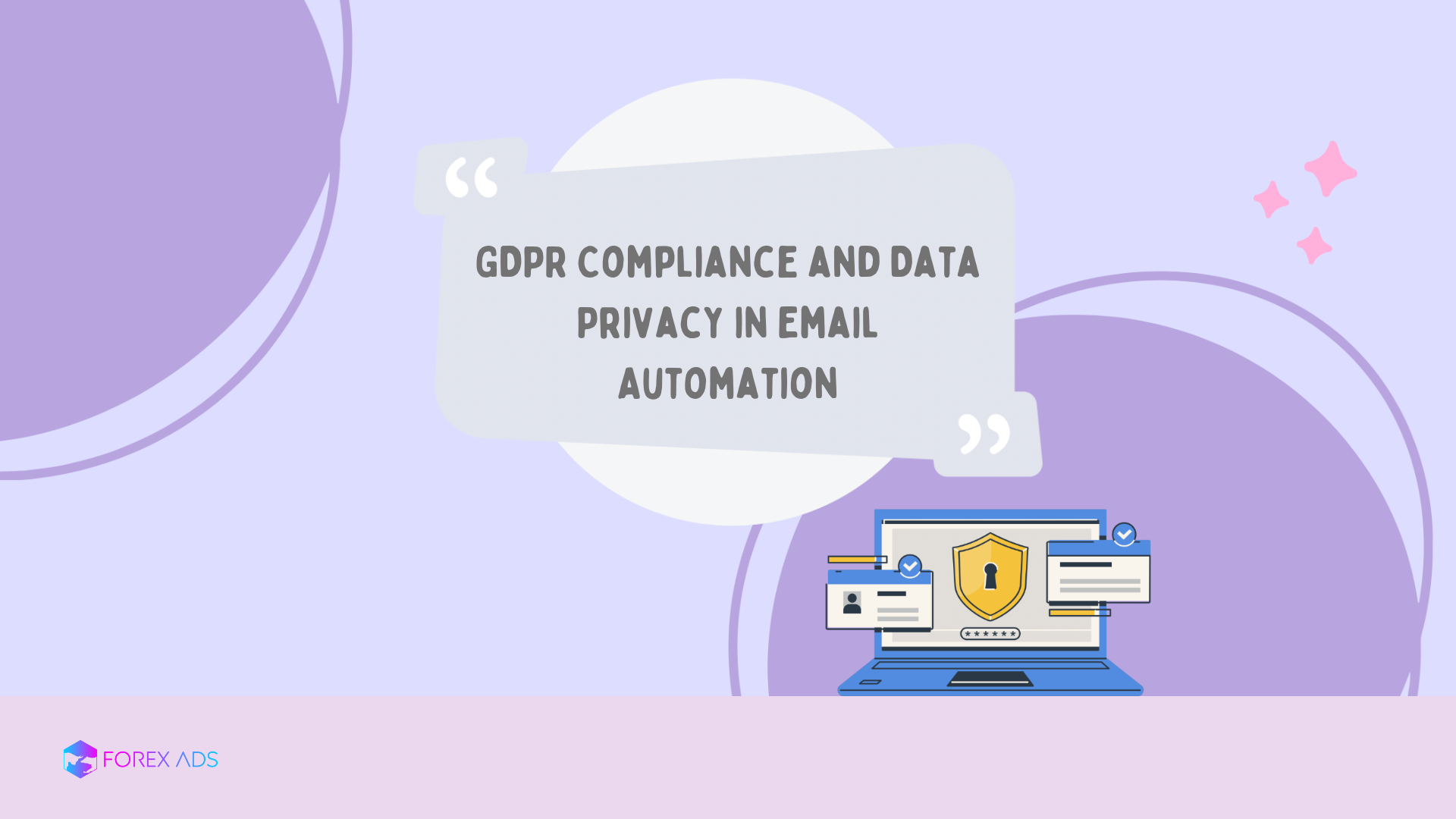
Email automation has become an essential part of digital marketing, allowing businesses to send targeted messages, nurture leads, and maintain customer relationships with minimal manual effort. However, automating email campaigns also involves collecting, storing, and processing personal information. This creates important responsibilities for businesses operating under the General Data Protection Regulation (GDPR). GDPR compliance is particularly important for companies targeting customers in the European Union. Businesses must ensure that their automated email automation practices respect individual data privacy rights while maintaining effective communication strategies.
GDPR Compliance and Data Privacy in Email Automation
The General Data Protection Regulation (GDPR) is an EU data protection framework that governs how organizations collect, process, store, and use personal data. It applies to businesses established in the EU and certain organizations outside the EU that offer goods or services to individuals in the European Economic Area or monitor their behavior.
In email automation, personal data can include email addresses, names, purchasing histories, browsing activity, preferences, and engagement records. Even when this information is collected through automated forms or marketing platforms, businesses remain responsible for processing it lawfully.
GDPR requires organizations to establish a valid legal basis for processing personal information. Consent is particularly relevant to promotional email marketing, although other legal bases may apply to specific communications and processing activities.
Obtaining Valid Consent Before Sending Marketing Emails
One of the most important GDPR requirements for email automation is obtaining valid consent when consent is the chosen legal basis.
Consent must be freely given, specific, informed, and unambiguous. Businesses should avoid automatically subscribing website visitors to marketing lists or using preselected consent checkboxes.
An effective subscription process should:
- Clearly explain what types of emails subscribers will receive.
- Identify the organization responsible for sending communications.
- Use an affirmative action, such as selecting an unchecked checkbox.
- Explain how subscribers can withdraw their consent.
- Maintain records showing when and how consent was obtained.
Businesses should also distinguish between transactional emails and promotional communications. Order confirmations, password resets, and service notifications generally serve a different purpose from newsletters and promotional campaigns.
The legal basis for each type of communication should be assessed separately.
Managing Subscriber Data Responsibly
Email automation platforms frequently collect information from multiple sources, including website forms, customer relationship management (CRM) systems, and e-commerce platforms. Connecting these systems can improve personalization, but it also increases the importance of responsible data management.
Businesses should collect only the information necessary for their intended marketing activities. For example, a company sending a monthly newsletter may only need an email address and perhaps a first name.
Collecting additional information without a clear purpose increases privacy risks and creates unnecessary data management responsibilities.
Organizations should also establish appropriate retention periods. Subscriber information should not be stored indefinitely simply because an email marketing platform makes long-term storage convenient.
Protecting Personal Information Through Secure Automation
Data security is another central element of GDPR compliance. Automated email systems process large volumes of subscriber information, making them potential targets for unauthorized access, data breaches, and misuse.
Businesses should implement appropriate technical and organizational security measures, including:
- Restricting access to subscriber databases.
- Using strong authentication and access controls.
- Encrypting personal information where appropriate.
- Regularly reviewing third-party integrations.
- Monitoring systems for suspicious activity.
- Maintaining procedures for responding to data breaches.
Organizations should also evaluate the security practices of their email service providers. Under GDPR, businesses using third-party platforms to process personal data may need data processing agreements that establish the responsibilities of each party.
Making Unsubscribe Options Easily Accessible
GDPR gives individuals the right to withdraw consent and, in applicable circumstances, object to direct marketing.
Email automation workflows must respect these choices. Every promotional email should provide a clear and accessible unsubscribe mechanism.
Businesses should ensure that unsubscribed contacts are removed from relevant marketing campaigns promptly. Automated workflows should also check subscription preferences before sending messages.
For example, if someone unsubscribes from a newsletter but remains subscribed to product updates, the system should respect those separate preferences rather than automatically removing or reactivating the entire contact record.
Organizations must also maintain suppression lists where necessary to ensure that unsubscribed individuals are not accidentally added to future campaigns.
Understanding Data Subject Rights
GDPR provides individuals with several rights concerning their personal information. These include:
- Right of access: Individuals can request information about how their personal data is being processed.
- Right to rectification: Individuals can request corrections to inaccurate or incomplete information.
- Right to erasure: Individuals can request the deletion of personal data in certain circumstances.
- Right to data portability: Individuals can request their data in a structured, commonly used, machine-readable format where applicable.
- Right to object: Individuals can object to certain types of processing, including direct marketing.
Email marketing teams should establish procedures for receiving and responding to these requests. Automated systems should be designed to support data corrections, preference updates, and deletion requests without unnecessary delays.
Working with Third-Party Email Automation Providers
Many businesses rely on external platforms to manage subscriber lists, create automated workflows, and analyze campaign performance. These providers may process personal information on behalf of the business.
Before selecting a platform, organizations should evaluate its data protection practices, security measures, contractual terms, and international data transfer arrangements.
If personal data is transferred outside the European Economic Area, businesses must ensure that an appropriate GDPR transfer mechanism is in place. Depending on the circumstances, this may involve an adequacy decision or Standard Contractual Clauses, alongside any necessary supplementary safeguards.
Choosing a provider based solely on pricing or automation features can overlook important privacy and compliance considerations.
So, what did we learn about Data Privacy in Email Automation?
GDPR compliance should be an integral part of every email automation strategy. Businesses need to consider privacy requirements when collecting subscriber information, designing automated workflows, selecting marketing platforms, and managing customer preferences.
By obtaining appropriate consent, limiting data collection, securing subscriber information, and respecting individual rights, organizations can reduce compliance risks while building stronger relationships with their audiences.
Responsible email automation is not simply about sending messages efficiently. It is also about ensuring that customer data is handled transparently, securely, and lawfully.
Also, we offer Multiple Digital Marketing Services. Take a look at them! Also, you can join us on Instagram.